For a long time, "freshness is the essence of fish" has been a belief deeply ingrained in Chinese culinary culture. However, in the world of high-end dining and Japanese cuisine,a flavor revolution about "time" is taking place—fresh fish is not the end of flavor; aging is the magic that unlocks its hidden depths.
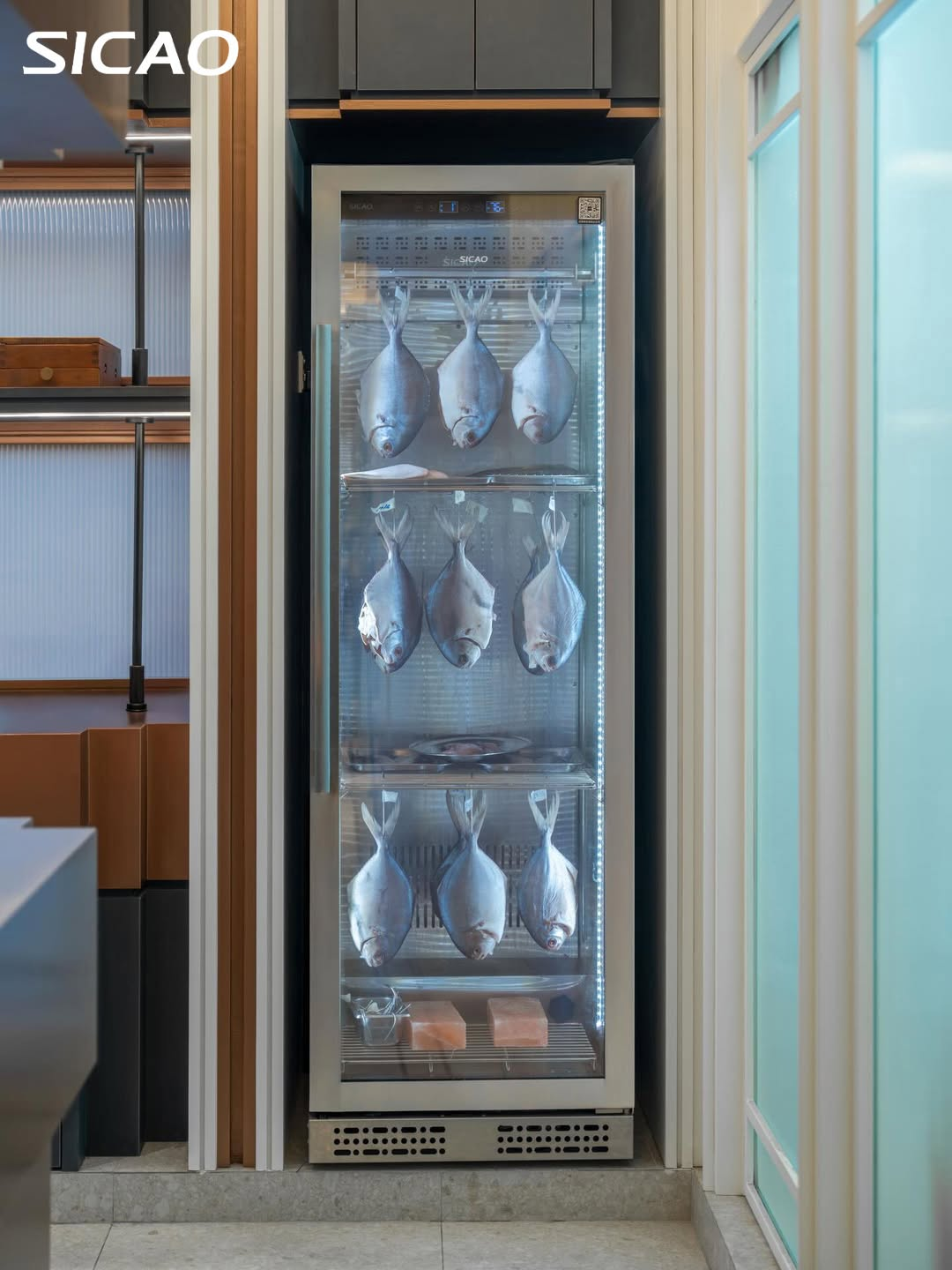
At SICAO, as we continue to explore the possibilities of aging cabinets, we believe that true delicacies require the protection of technology and the patience of time. Today, let us step into the world of aged fish.
Aging, in simple terms, is a process in which the endogenous enzymes within fish and specific environmental microorganisms, under precisely controlled temperature and humidity conditions, break down proteins, fats, and glycogen into amino acids, fatty acids, and sugars.
Glutamic acid—the compound responsible for "umami" flavor—significantly increases during this process. This is not "spoilage," but acontrolled transformation toward peak flavor. Research shows that the umami amino acids and nucleotides in dry-aged fish increase markedly.
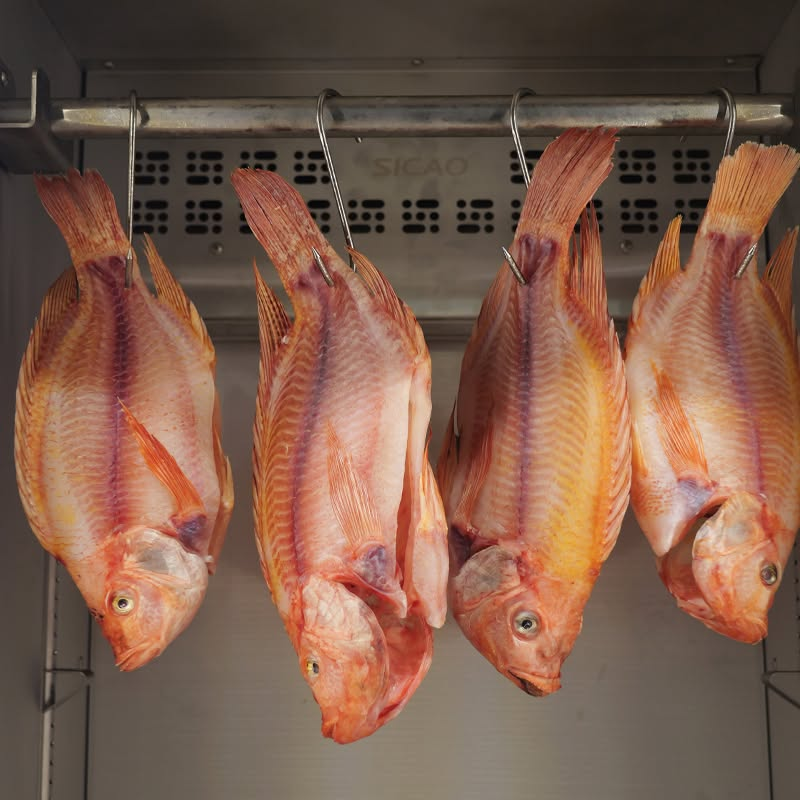
Flavor Elevation: Freshly caught fish enter a "rigor mortis" stage, where the flesh is firm and the flavor has not yet developed. Aging allows the fish to "relax" from rigor. Through enzymatic action, complex flavor compounds are generated. Fish that originally taste mild evolve into a deeper, more layered sweetness with nutty undertones.
Textural Transformation: With moderate moisture loss (especially in dry aging), fish fibers becomefirmer, more elastic, and develop a "melting," ham-like richness on the palate. For example, aged amberjack becomes chewy, tender, and noticeably sweeter.
Quality Enhancement: The aging process itself is a form of quality screening. Only fresh, properly handled, high-quality fish can withstand the test of time. Therefore, aged fish is often synonymous with premium quality.
In the application of aging cabinets, there are two main approaches—dry and wet—each yielding distinctly different results:
Dry-Aging: Fish is placed in a professional aging cabinet withprecise temperature and humidity control (e.g., 2±2°C, humidity 75±10%), allowing natural moisture evaporation. This intensely concentrates the flavor and firms up the texture, but comes with significant weight loss (studies show up to 45% loss).
Wet-Aging: Fish is typically vacuum-sealed or stored in a closed container, aging in its own juices. This method results in minimal moisture loss, better preserving the natural juiciness and tenderness of the fish—ideal for those seeking a delicate texture or for preparing sashimi.
In the past, aging depended entirely on a chef's experience and intuition, and the unstable environment of standard kitchen refrigerators made failure rates high.With its core patent-pending precision temperature-and-humidity control technology, SICAO transforms "empirical science" into replicable "precision science."
Our aging cabinets are engineered forultimate flavor:
Precise Temperature & Humidity Control: Provides a stable, clean environment for fish aging, inhibiting harmful bacteria while optimizing beneficial enzymatic activity.
Low-Yield-Loss Aging: With UV sterilization and a circulating ventilation system, we ensure safety while minimizing spoilage-related losses during the aging process.
Whether you are a culinary professional seeking a stable supply of premium ingredients or a gourmand exploring the nuances of flavor at home, the SICAO aging cabinet is your reliable partner in this flavor experiment.
Let go of the stereotype of "freshness at all costs." Inside a SICAO aging cabinet, wait for a fish to reveal its most glorious brilliance.


Address:12/F, Guowei E-Commerce Bld Guowei Road Luohu District Shenzhen China.
Tel:+86-755-82383909
Fax:+86-755-82383797
E-Mail:niti@cnsicao.com
whatsapp:+86-18924648232